Is the “K‑Shaped” economy showing up in Scotland’s insolvency figures?


or reach out to a member of our Restructuring & Recovery team.
Originally published in the Herald Business Supplement
Economic commentators love shorthand jargon. It’s a way of explaining complex ideas in a simplified way that – they hope – catches the attention of the general population. We have had “V‑shaped recoveries”, “L‑shaped recessions”, and the “great resignation” all shorthand to explain various recent economic trends. The latest addition to the lexicon is the “K‑shaped economy”, a term that barely registered on Google searches before 2021 but has since become a popular term to explain uneven economic performance. The imagery is simple: one arm of the “K’’ slopes upward, representing segments that thrive through technology, capital strength or structural advantage, while the other arm slopes down, capturing sectors and households that fall further behind.
It is an appealingly tidy metaphor. But is there any evidence in Scotland’s corporate failures to support this?
On the surface, the headline figures don’t point to dramatic shifts. Corporate insolvencies continue to average roughly 100 per month, and overall totals remain broadly consistent from one year to the next. But when you look beneath the stability of the top‑line numbers and focus on where distress is occurring, a more layered and uneven picture emerges.
Scottish corporate Insolvencies

A stable surface, but uneven currents beneath
One of the clearest features of recent data is that the burden of corporate failure continues to fall disproportionately on small, thinly capitalised businesses operating in competitive low-margin industries.
When large-scale redundancies (20 or more) are proposed by an employer or Insolvency Practitioner, an HR1 form must be submitted to allow the start of the redundancy consultation process. Large scale redundancy notifications which would typically indicate deeper structural contraction have not materially accelerated. This will of course be cold comfort to the individuals made redundant as a result of company failure, particularly as a number of these companies will be owner managed, where the directors’ personal financial commitments such as personal guarantees are intertwined with the company.
By contrast, relatively well‑capitalised companies, those with strong balance sheets or access to deeper pools of funding from private equity or institutional lenders, have been able to absorb cost pressures through refinancing, restructuring or internal reorganisation. This doesn’t mean they are immune to rising interest rates, energy prices or demand volatility, but rather that these shocks are not existential in the way they can be for smaller firms.
Sectors on the downward arm
Construction
The construction industry continues to bear a disproportionate high number of corporate failures with around 200 construction companies failing each year in Scotland.
It’s an industry typically operating on tight margins, often exposed to fixed price contrast rising labour costs and persistent supply chain volatility. Even modest increases in borrowing or energy costs or delays in payment cycles can quickly erode working capital.
Hospitality and Leisure
The hospitality and leisure sector faces many of the same vulnerabilities. With around 280 annual failures, it remains one of the most distressed segments of the Scottish economy. Structural thin margins mean that even after recovery from pandemic-era disruption, the sector remains fragile and prone to failure spikes.
Health & Social Care Sector
The care sector tells a similar story but with even more pronounced deterioration. Insolvencies have risen by over 50% in the past 12 months, reflecting longstanding funding constraints and persistent margin pressure. Whilst the numbers of failures remain small relative to other industries, these trends underscore the reality that some parts of the economy are still firmly on the downward arm of the “K”.
But not everything fits the K‑shape
However, the data also shows that the divergence is not as clear‑cut as the metaphor suggests.
Arts, Entertainment and Recreation
Despite being another low‑margin sector, the arts and entertainment industry has actually seen a reduction in insolvencies over the past year. This is somewhat counter‑intuitive given the sector’s sensitivity to discretionary spending. But pent‑up consumer demand and the nimbleness of business models appear to have injected a degree of stability. It’s a reminder that not all structurally exposed industries are currently worsening, some are genuinely improving.
Tech’s surprising weak spot
Conversely, a sector typically considered to be on the upper, thriving arm of the K‑shape is showing early cracks. The tech sector, buoyed for years by rapid digitalisation and investor appetite, has seen insolvencies rise by around 50% in 2025 this suggests tighter funding conditions and reluctance of investors to contribute to new funding rounds may be having an impact in Scotland.
What does the pattern really tell us?
Taken in aggregate, Scotland’s insolvency data presents an economy that is remarkably resilient on the surface, but uneven in its foundations. Total figures remain broadly static, and because the absolute numbers in many sectors are relatively small, a small number of failures, can make percentage changes look more dramatic.
This calls for a health warning when interpreting this data: for every struggling company in the care sector, there will be more that are flourishing. So we should be cautious when fitting the numbers into any neat narrative, including the K‑shape.
Nevertheless, if there is a pattern evolving, then it’s clear some sectors long assumed to be on the lower arm of the K, such as arts and entertainment, are stabilising and even improving. Meanwhile, some that appeared securely on the upper arm, notably tech, may now be showing signs of stress. The clear divergence implied by the K‑shaped metaphor appears to be softening, with lines bending inward rather than pulling apart.
If that trend continues, we may soon hear less about the dramatic split of a K‑shaped recovery and more about a curve that looks closer to a “C”. And if that phrase starts appearing in economists’ presentations next year, remember where you heard it first.
If you have any queries about insolvency or how the economy is shaping insolvency figures, please do not hesitate to get in contact with David McGinness, or your usual AAB contact.
How AAB can help
Restructuring & Recovery
When financial pressures hit, AAB’s Restructuring & Recovery team is here to help. They work closely with business owners, directors, and individuals to find the best way forward - whether that’s recovery, restructure, or winding things down. If a business can be saved, AAB steps in early with honest, practical advice. They help improve cashflow, cut costs, and boost performance. If closure’s the right path, they manage solvent liquidations efficiently and tax-effectively. When insolvency can’t be avoided, they support with formal processes like administration or liquidation - always with care and clarity. For individuals, AAB offers straightforward guidance on personal debt and insolvency. No judgement. Just a calm, supportive approach to relieve stress and explain your options. Their experts also work with creditors, helping recover debts and assess the viability of struggling businesses. Whether you’re facing a bump in the road or a serious challenge, AAB’s focus is always the same - helping you take control and find a way through.
View our restructuring & recovery serviceRelated services
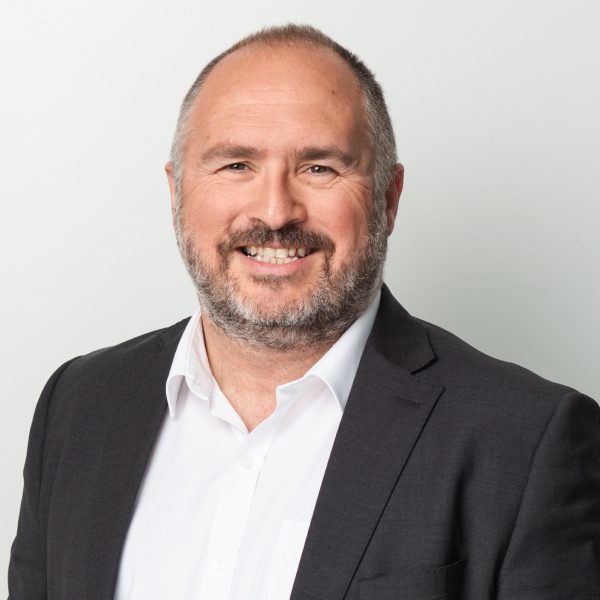
David McGinness
Restructuring & Recovery Partner
Contact David McGinnessor reach out to a member of our Restructuring & Recovery team.